The Making of The Mythos Legend
Unless you have been living under a rock, you’ve already heard about Anthropic’s newest “un-releasable” frontier model, Mythos and project Glasswing. Today’s post is to exercise my Dueling Narrative approach for dealing with potentially significant events with few verifiable facts (aka objective truth).
Fanboys can’t wait to take them at their word:
•Humans can’t be trusted with this power, but “we” can.
•The bugs are everywhere, including the bugs of the ancients.
•Game over without the power of AI.
•$100 Million in usage credits invested.
Haters got to hate with a healthy dose of skepticism:
•Don’t believe the hype.
•They are doubling down on the Responsible AI “brand”.
•How many 0-days did you find, are they exploitable and why should I trust you again?
•You are not the only game in town.
My observations:
•Some actor’s day has been ruined – what’s one to do when your 0-days have been burned? Use them now and blame it on Opus?
•They have started an arms race – Organizations are spending tokens like drunken sailors to test without proper methodologies, safety controls or commercial coverage in place.
•There are very competent open models and tools in the wild as well as private capabilities – The genie left the bottle a long time ago.
•The tech debt collector hath cometh home to roost!
A reasonable response:
•Keep Calm Don’t Panic – Act with purpose.
•Practice hyper vigilance, accelerate your (AI assisted) threat hunting activity and consider every day patch Tuesday (at least for the next 90 days).
•Monitor Anthropic’s & Glasswing comms and ensure your threat feed subscriptions are all current.
•Contact key vendors.
•Hack yourself and prepare for the possibility of tier 1 apps being taken offline (attacked or identified for radical remediation).
•Have a plan.
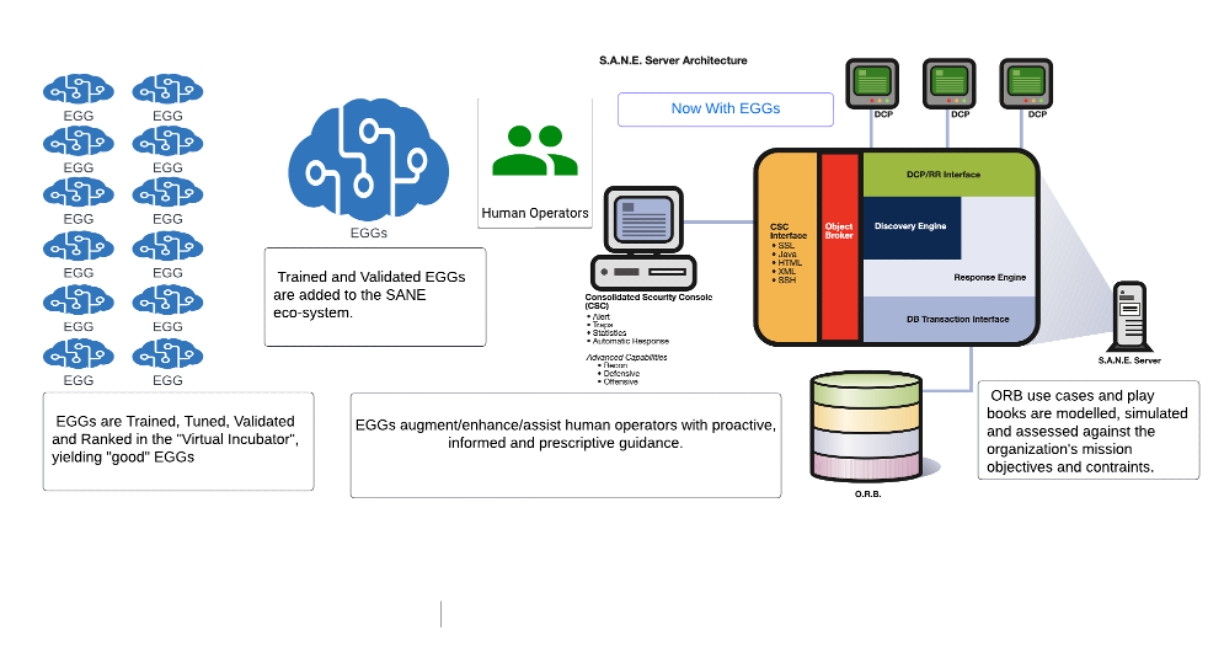
We’re not Joking. Good EGGs are the SANE Approach
As, promised: We are releasing exciting new research to the community featuring EGGs (Emergent Generative Generators) combined with SANE.
Be safe. Talk soon.
The Good, the Bad and the Ugly
Hey sports fans, here comes the next installment of AI Matters Unfiltered. I’m still working through the AI Vendor landscape, looking for ways to develop system confidence without control (Trust Enhanced Risk Management anyone?). This prompted me to ping Dr Cofta and re-review his most excellent paper on becoming “Plumbers of Trust”. I love the concept and it’s never been more relevant or needed. More to come soon, but for now do your homework and click the legacy links above.
Speaking of plumbers of trust, I wanted to share some work I have been doing with two of our newest neighbors Hannah Feltz and Vinnie Aragona, who I have the distinct pleasure of working with at WWT. The Artificial Intelligence Security & Compliance Ops Unit Technical Services (AI SCOUTS), as our team is known, has the coolest remit in the world. We focus on holistic Trustworthy and Responsible AI systems through their entire life-cycle.
So, as a very special February valentine to the community, I present “Exploitable Insight” from WWT’s AI SCOUTS. It's about ready to get all real up in here, if you know what I mean, because…AI Matters!
#AIMATTERS
Day-Con XVIII and Beyond...
I can honestly say, this was the best year ever. My Bliss Index is high, my stress level is low and I am rediscovering my passion for hacking. What a stellar way to head into 2025.
Speaking of 2025, here is a sneak peak:
1. We will be posting presentations and summit notes from Day-Con XVIII in the coming weeks.
2. The Deep Fake Justice League will be coming to a conference near you. There will be games, because "something wicked this ways comes"
3. Supply Chain Smoking, The "Glitch Index" and "The Good, the Bad, and the Ugly" blogs are in the queue.
4. Save the date for Day-Con XIX - September 13th, 2025 - Learn, Work and Play Harder in Dayton!
5. We will be releasing exciting new research to the community featuring EGGs (Emergent Generative Generators) combined with SANE.
Be safe. Talk soon.
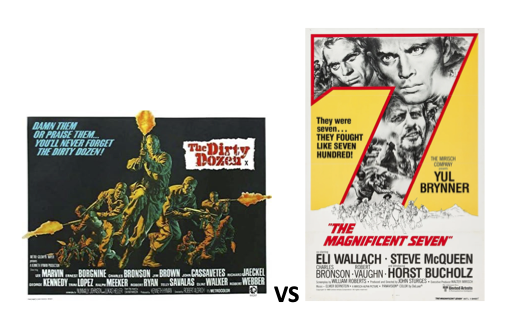
The Dirty Dozen vs The Magnificent Seven
Trustworthy & Responsible Generative AI (Gen AI) is tough - Full Stop. Agreeing on what it is, or more importantly what it isn’t, is also not easy. Perhaps, that is the root of all the confusion. Without discussing the merits of any one stakeholder’s position, perhaps we can pick one definition and then compare that against real world mission statements and Service Level Agreements (SLA’s), Warranties and Guarantees.
I have become fond of calling the 12 risk categories associated with Generative AI as described in NIST AI 600-1, as “The Dirty Dozen”. Distilled down to its essence, the document describes in detail how human beneficiaries could be harmed if a generative AI system fails. It has become my lens of choice when assessing Gen AI systems.
The 12 listed out:
1. CBRN Information
2. Confabulation
3. Dangerous or Violent Recommendations
4. Data Privacy
5. Environmental
6. Human-AI Configuration
7. Information Integrity
8. Information Security
9. Intellectual Property
10. Obscene, Degrading, and/or Abusive Content
11. Harmful Bias or Homogenization
12. Value Chain and Component Integration
Humans love stories. Armed with the Dirty Dozen I can have impactful and productive conversations with various stakeholders when discussing curated threat catalogs and control affinities. This approach has proven to be very effective when communicating complex concepts like “AI Hallucinations” (i.e. Confabulation) to the people responsible for securing these systems. Further, it allows me to be very prescriptive when discussing reasonable ways to address residual risk with compensating controls.
A curated threat catalog is simply a list of bad things that have or could happen to an organization that would cause harm to their stakeholders. Historically, organizations focus more on risk management than threat catalogs. However, from a story telling perspective people seem to gravitate to the threats regardless of the likelihood that bad thing could happen. A proper threat catalog distills the world of threats into “stories” (aka. threat scenarios) of the most relevant threat items to your organization and stakeholders. What’s in your threat catalog?
System confidence is a combination of trust and control. In the absence of trust, control is all you have. By assessing specific threat catalog items against the harm they could cause, we can develop “structured choice” by suppling lists or groups of controls that have a high degree of affinity for addressing the harm that could be caused by said threat item.
Once an organization decides to address its threat catalog items, they must actually choose the controls they will use to address residual risk. [Residual risk is the difference between the organization’s current risk profile and the risk profile the organization wants.] Then the organization can leverage its understanding of control affinities to choose the best controls to mitigate the possibility or impact of bad outcome for their organization. Compensating controls allow organizations to “treat” residual risk.
When we put it all together, these are the types of informed conversations I can now have.
Client: “We want to use Generative AI to do something cool. But we want to make sure our system doesn’t tell people to hurt themselves or others (bad things). We want to make sure that our system does not discriminate, exclude or insulant its users (our stakeholders). We want to make sure we are good stewards of the world’s limited resources (see hammer and nails). We also want it to be cost effective, safe, secure and easy to operate.” [No tall order here ;)]
Me: “It sounds like you want to implement a new productivity tool and have a holistic view on Trustworthy and Responsible AI. Assuming you already have a mature governance foundation in place, you should start by validating your business case, agreeing to a list of bad things you want to protect against and putting controls in place that will provide a high degree of certainty in how it is operated.”
Client: “Yeah, that sounds about right.”
We now have a reasonable starting point and can move on to control selection. It’s beyond the scope of this blog to talk about all the types of controls available to organizations. Suffice to say, one size does not fit all and there are many controls that can be used to provide the required system confidence. Much like threat catalogs, organizations should consider building their own curated control catalogs. These catalogs contain lists of controls that currently exist in the organization and some insight to their cost and maturity.
One set of controls that are NOT often discussed, but should be considered, are Service Level Agreements (SLA’s), Warranties and Guarantees. There are controls that attempt to boost system confidence via commercial remediates and assertions. This is where it gets interesting.
Besides being a most excellent western, The Magnificent Seven is also what Bank of America analyst Michael Hartnett calls the market dominating tech companies. I wondered what the leaders in technological change, dominance and influence, consider Trustworthy and Responsible? More importantly, do they put their shareholder's money where their mouth is? So, I decided to collect and review their words:
1. Alphabet
2. Amazon
3. Apple
4. Meta
5. Microsoft
6. NVIDIA
7. TESLA
My initial read is that there is an overabundance of platitudes and “good words” and little on commercial remedy or legal recourse should the vendor fail to deliver on their obligations in these vendor assurances. This exercise reminded of another awesome movie, “The Good, the Bad and the Ugly”. Please make sure to check out my deep dive review of The Good the Bad and the Ugly in my next blog coming to a small screen near you because…AI Matters!